Deep cleaning removes embedded dirt, microbial buildup, and allergens from surfaces that routine cleaning misses, and choosing a reliable provider ensures consistent, measurable improvements in hygiene and indoor air quality. This guide explains what reliability means in the context of professional deep cleaning, how to evaluate trust signals such as licensing and staff vetting, and which service inclusions truly matter for homes and businesses. Many homeowners and facility managers face uncertainty about costs, scope, and safety when soliciting deep cleaning—this article offers clear verification steps, pricing transparency tips, and a comparison of residential versus commercial scopes. You will find practical checklists, comparison tables, and exact questions to ask before hiring so you can compare providers objectively. The guide also highlights why eco-friendly products matter, how local expertise improves outcomes in the New Hampshire seacoast and surrounding regions, and how to use testimonials and case studies to validate claims. Throughout, target keywords such as choosing reliable deep cleaning companies, eco-friendly deep cleaning, and reliable deep cleaning NH are woven into actionable advice.
What Defines a Reliable Deep Cleaning Company?
A reliable deep cleaning company consistently delivers thorough results by combining verified credentials, trained staff, transparent pricing, and documented quality control systems. Reliability works because these elements reduce risk—licensing and insurance transfer liability, staff vetting limits safety incidents, and clear scope prevents misunderstandings—resulting in predictable cleanliness and lower long-term costs. In practice, reliable providers operate with formal checklists, repeatable processes, and evidence such as recent reviews that show consistent outcomes. The next sections break these trust signals into verifiable components you can check before hiring and describe how each factor affects safety, quality, and your peace of mind.
When evaluating providers, focus on a compact set of core reliability criteria that indicate professional standards and accountability:
- Providers should be licensed, bonded, and insured to protect clients and staff during deep-clean operations.
- Staff should be background-checked, thoroughly trained, and supervised to maintain consistent cleaning quality.
- Transparent, itemized pricing and written scopes of work should be provided to prevent hidden fees and scope creep.
These criteria create a baseline for comparison and lead directly into specific verification steps, such as requesting proof of insurance and asking about training programs.
Why Are Licensing, Bonding, and Insurance Essential?
Licensing, bonding, and insurance each play a distinct role in risk mitigation and client protection: licensing demonstrates regulatory compliance, bonding secures client reimbursement for specific losses, and insurance covers property damage or worker injuries. Verifying these documents ensures that liability does not fall on the homeowner or business if accidents occur during a deep clean, and it signals that a company adheres to local business regulations. When you request proof, ask for current certificates and policy numbers and note expiration dates; follow-up verification with the issuing authority is a prudent step. Understanding these protections helps you compare providers based on actual coverage rather than marketing claims, which leads into how staff qualifications further reduce client risk.
How Does Staff Vetting and Training Impact Cleaning Quality?
Background checks and structured training programs directly influence the consistency and reliability of cleaning outcomes by reducing theft risk and improving technique adoption across teams. Vetting typically covers criminal background, employment history, and references, while training emphasizes proper use of products, safety protocols, and quality-check procedures. Companies that document onboarding and ongoing training provide measurable assurance—supervisory spot-checks and standardized checklists translate training into repeatable performance. Asking specific questions about vetting frequency and training curricula helps you predict how consistently the crew will meet agreed standards and prepares you to evaluate performance post-service.
What Role Do Customer Reviews and Testimonials Play?
Customer reviews and testimonials function as social proof and a running audit of a company’s reliability when they include specific details, dates, and photos that demonstrate consistent performance. High-volume, recent, and specific reviews indicating repeat business are strong signals of sustained quality, whereas few or overly generic reviews warrant caution. To validate testimonials, compare website testimonials with third-party review profiles and the provider’s listing on their business profile; consistency across sources increases confidence. Interpreting reviews in this way enables you to separate one-off positive experiences from providers that reliably deliver deep-cleaning results.
What Services Should You Expect from Residential and Commercial Deep Cleaning?
Deep cleaning services vary by property type but generally focus on removing embedded dirt, sanitizing high-touch surfaces, and addressing hard-to-reach areas such as vents and appliance interiors. The mechanism is targeted agitation, controlled cleaning agents, and systematic attention to meronymous components—baseboards, vents, inside appliances—that comprise a genuinely deep clean. For homeowners, the emphasis is often on allergen reduction and family-safe products; for businesses, priorities include compliance, uptime, and scalable scheduling. Below is a compact comparison to help choose the appropriate service for your situation.
Different property types require different scopes and timing:
| Service Type | Typical Inclusions | When to Choose |
|---|---|---|
| Residential Deep Cleaning | Deep dusting of baseboards, vents, inside appliances, window sills, and detailed kitchen and bathroom sanitization | Choose before move-in/out, seasonal deep clean, or when allergy reduction is needed |
| Commercial Deep Cleaning | High-touch surface sanitization, floor deep-scrub, restroom sanitation to code, HVAC vent cleaning, and scheduled night/weekend service | Choose for offices, retail, medical, or food-prep sites with compliance or high-traffic needs |
| One-Time Specialty Clean | Carpet shampoo, upholstery deep-clean, post-construction debris removal, and odor remediation | Choose for renovation cleanup, pest-related residue removal, or special events cleanup |
This table clarifies typical inclusions and helps you match service type to your needs. Next, a detailed residential checklist shows the room-by-room expectations for a thorough home deep clean.
What Is Included in a Residential Deep Cleaning Checklist?
A residential deep cleaning checklist itemizes tasks that remove deeply embedded dirt and allergens from living spaces, ensuring thorough sanitization and improved indoor air quality. Common items include cleaning inside and behind appliances, scrubbing baseboards and trim, vacuuming and wiping vents, descaling hard water buildup in bathrooms, and deep-cleaning upholstery and carpets as optional add-ons. Optional services often include steam cleaning, carpet shampoo, and upholstery treatment; verify whether these extras are itemized or billed separately. Using such a checklist as a comparison tool enables homeowners to ensure the quote covers the exact scope required and prevents unwelcome surprise charges.
Residential deep cleaning tasks often fall into room-by-room groupings:
- Kitchen tasks focus on inside appliances, cabinet fronts, and backsplash degreasing.
- Bathroom tasks emphasize grout, scale removal, and faucet sanitization.
- Living areas and bedrooms include deep dusting, vent cleaning, and upholstery spot treatment.
A short summary: ensure your written estimate maps directly to this checklist so you can confirm the provider will perform the expected deep-clean actions.
How Do Commercial Deep Cleaning Services Differ?
Commercial deep cleaning scales the residential checklist into protocols that support continuous operations, regulatory compliance, and larger spaces, using specialized equipment and scheduling outside business hours to minimize disruption. Commercial crews often employ stronger yet controlled cleaning agents, ride-on scrubbers, and HEPA-filter vacuums for expansive floor areas, along with documentation for compliance-sensitive environments. Frequency and scope are typically driven by foot traffic, industry regulations, and risk exposure—for example, a medical clinic requires more rigorous sanitation standards than a small retail boutique. Comparing commercial bids requires attention to equipment, documented procedures, and whether the provider offers night or weekend scheduling to meet operational needs.
Commercial-scale processes emphasize repeatability and auditability:
- Standard operating procedures and quality checklists for large crews
- Specialized equipment and supplies appropriate to the facility type
- Clear scheduling and contingency plans to protect business continuity
These differences affect pricing and the level of project management required, which we unpack in the pricing section.
How Does Green Maids’ Proprietary Deep Clean Process Ensure Thoroughness?
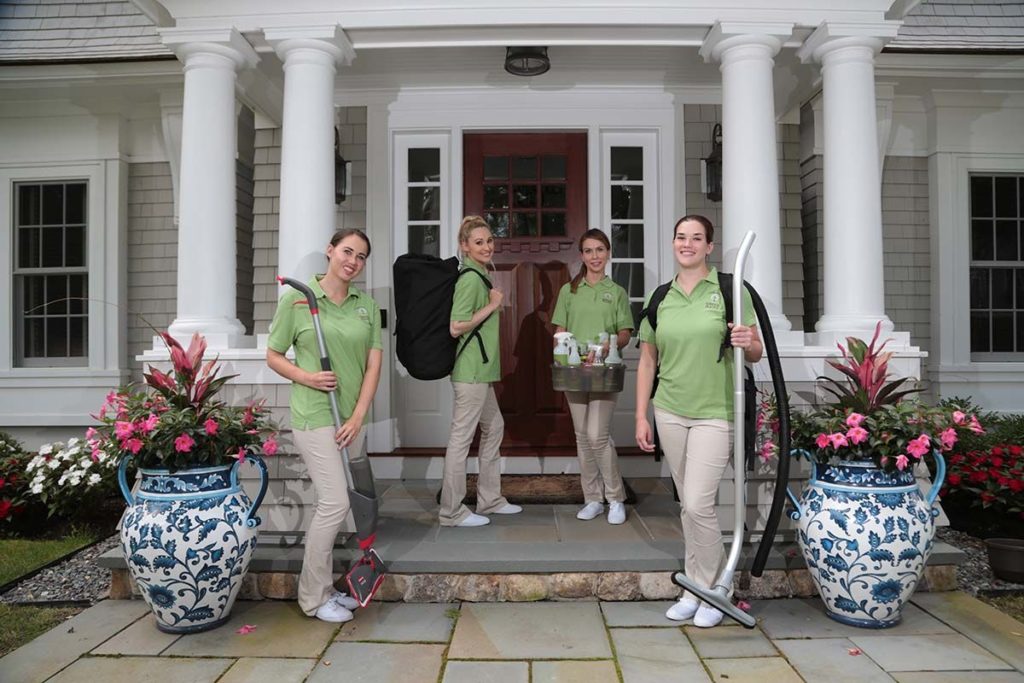
Green Maids Cleaning, LLC describes a proprietary “Deep Clean process” designed for both residential and commercial properties that emphasizes a comprehensive, repeatable methodology to exceed typical standards. The process focuses on reaching hard-to-reach areas, improving sanitization, and enhancing indoor air quality through systematic tasks and documented quality checks. As an exemplar, Green Maids’ Residential Deep Cleaning and Commercial Deep Cleaning offerings use trained, background-checked staff and standardized procedures to deliver consistent results. This structured approach provides measurable outcomes—reduced allergen load, visible removal of embedded grime, and predictable service delivery—making it easier to compare scope and guarantees across providers.
A brief summary: when a company presents a repeatable, documented deep-clean process such as the one described by Green Maids Cleaning, LLC, it indicates operational maturity and stronger quality control than ad-hoc crews.
Why Choose Eco-Friendly Deep Cleaning Providers?
Eco-friendly deep cleaning relies on all-natural, biodegradable, and non-toxic products to achieve sanitization without introducing harmful residues, and this approach protects occupant health while reducing environmental impact. The mechanism is selecting products whose active agents break down harmlessly and using application techniques that maintain efficacy while minimizing exposure. Benefits include reduced chemical off-gassing, safer environments for children and pets, and alignment with sustainability goals for businesses. The next paragraphs explain key product attributes, how to verify claims, and why these choices matter for both homes and workplaces.
Below is a table clarifying common eco-friendly product attributes and their benefits so you can evaluate claims.
| Product Attribute | What It Means | Benefit |
|---|---|---|
| All-natural | Ingredients derived from plant or mineral sources rather than synthetic petrochemicals | Reduced toxic exposure for residents and staff |
| Biodegradable | Breaks down into natural compounds in the environment | Lower long-term environmental impact |
| Non-toxic | Formulated to minimize acute or chronic health risks at recommended use levels | Safer for children, pets, and sensitive occupants |
| Earth-friendly | Broader claim including sustainable sourcing and reduced environmental harm | Supports corporate sustainability goals |
This table helps decode vendor language and assess which product attributes produce tangible benefits for occupants and the environment. Next, see how one local provider applies these attributes in practice.
What Are the Benefits of Using All-Natural, Non-Toxic Cleaning Products?
All-natural, non-toxic cleaning products reduce occupant exposure to volatile organic compounds and harsh chemical residues, lowering risks for respiratory irritation and chemical sensitivities. In indoor environments, this contributes to improved indoor air quality and fewer acute reactions among children, elderly residents, and pets. Properly selected eco-friendly agents can match the effectiveness of conventional cleaners when used with correct techniques, such as dwell time and mechanical agitation. Assessing product safety and efficacy together ensures you do not sacrifice performance for environmental claims.
These health and environmental benefits create operational reasons to prefer green cleaning in both homes and business premises, which leads into how to verify eco-friendly claims.
How Does Green Maids’ Eco-Friendly Approach Stand Out?
Green Maids Cleaning, LLC exclusively uses all-natural, eco-friendly, biodegradable, earth-friendly, and non-toxic products across its Residential Deep Cleaning and Commercial Deep Cleaning services, positioning the company as a specialist in greener cleaning methods. This exclusive product policy reduces chemical exposure for clients and supports sustainability goals for businesses that prioritize environmentally responsible vendors. The company’s staff are described as background-checked, thoroughly trained, and detail-oriented, which pairs eco-friendly products with consistent application techniques to maintain efficacy. Choosing a provider with these combined attributes helps ensure both safety and performance.
Summarizing the point: exclusive use of green products plus trained staff strengthens the effectiveness and safety of a deep-clean offering.
Why Is Eco-Friendly Cleaning Important for Residential and Commercial Spaces?
Eco-friendly cleaning matters differently across contexts: in homes it protects vulnerable family members and pets, while in businesses it supports employee health, brand reputation, and sustainability commitments. In workplaces, reduced absenteeism and improved perception among customers and staff can be direct outcomes of healthier indoor environments. For healthcare-adjacent or child-focused facilities, eco-friendly methods can reduce chemical interactions with sensitive surfaces and materials. Ultimately, choosing eco-friendly deep cleaning balances human health benefits with environmental responsibility, creating value beyond immediate cleanliness.
This situational perspective helps you prioritize eco-attributes based on occupant vulnerability and brand or regulatory expectations.
How Do Pricing and Transparency Affect Your Choice of Deep Cleaning Company?
Transparent pricing clarifies what is included, how add-ons are charged, and which cost drivers—such as property size, condition, customizations, and travel—will affect your final estimate. When providers produce itemized quotes and written scopes, clients can compare bids objectively and avoid surprise fees. Cost transparency also reveals whether a provider uses high-quality, eco-friendly supplies or charges separately for optional specialty services, which influences total value rather than just headline price. Below is a practical table that explains common cost factors and their typical impact on price to reduce sticker shock and guide comparisons.
| Cost Factor | What It Covers | Typical Impact on Price |
|---|---|---|
| Property Size and Condition | Time required, number of technicians, and equipment needed | Larger or dirtier spaces increase labor and time costs |
| Service Customizations/Add-ons | Carpet shampooing, upholstery, specialty sanitization | Adds per-item fees; negotiated or itemized in quotes |
| Travel and Scheduling | Distance, peak-time scheduling, weekend or emergency service | Travel fees or premium scheduling rates may apply |
| Equipment and Supplies | Use of HEPA vacuums, eco-friendly products, or industrial scrubbers | Higher-grade equipment increases cost but improves outcomes |
This table helps translate line items in quotes into expected impacts so you can judge value instead of simply comparing totals. Next, learn how to secure transparent, fair pricing.
What Factors Influence Deep Cleaning Service Costs?
Deep cleaning cost factors include square footage and property condition, frequency of service, required equipment and supplies, and travel/time for crews. Heavily soiled or neglected properties require more intensive labor and potentially specialty treatments, increasing labor hours and material use. Commercial projects may incur additional costs for after-hours scheduling, compliance documentation, or specialized waste handling. Understanding these drivers helps you frame the right questions and compare apples-to-apples when reviewing multiple estimates.
Clarity on these drivers enables better negotiation and expectation setting, which ties directly into practices that ensure transparent pricing.
How Can You Ensure Transparent and Fair Pricing?
Secure transparent pricing by requesting an itemized written quote, clarifying which services are included versus optional, and asking about policies for stains, appliance interiors, or extra time. Insist on a clear cancellation or re-clean policy and written confirmation of any guarantees or follow-up commitments. Compare at least two bids using the same checklist to ensure comparability. These steps reduce the chance of unexpected charges and ensure the selected provider stands behind their scope.
Taking these steps provides a reliable basis for selecting a provider and prepares you to verify estimates during contract review.
What Questions Should You Ask About Pricing Before Hiring?
Prepare a short, exact list of questions to use when contacting providers so you obtain comparable information and transparent answers. Use the list below during initial outreach and include any follow-up questions that clarify exclusions or special circumstances.
- What exactly is included in the written quote? Ask for an itemized scope rather than a lump-sum price.
- Are there additional fees for travel, supplies, or stains? Clarify which situations trigger extra charges.
- Do you offer a satisfaction guarantee or re-clean policy? Know how disputes are resolved and whether follow-up work is covered.
Using these questions will help you identify hidden costs and select a provider that values transparency and client trust.
How Does Local Expertise Enhance Deep Cleaning Services in New Hampshire and Surrounding Areas?
Local expertise improves deep cleaning by aligning methods with regional property types, climate-related issues, and local scheduling norms; providers familiar with local conditions can anticipate seasonal residue such as salt or pollen and adapt treatments accordingly. Local, insured companies are often more responsive for follow-ups and build reputations within the community that incentivize consistent quality. Understanding how regional factors affect cleaning outcomes helps you choose a provider whose experience translates to fewer callbacks and better long-term results.
Local knowledge also influences logistics and responsiveness, which we break down in the next subsections.
What Are the Benefits of Hiring a Locally Owned and Insured Cleaning Company?
Hiring a locally owned and insured company delivers accountability, easier scheduling, and direct community reputation management—attributes that often lead to faster service recovery and more personalized care. Local firms may also better understand typical property materials and seasonal maintenance needs relevant to New England climates, allowing tailored approaches. Insurance and bonding aligned with local requirements protect clients and indicate a company’s commitment to professional standards. These advantages together mean fewer surprises and stronger post-service support.
These benefits set the stage for understanding exact local service areas a provider covers.
Which Areas Does Green Maids Cleaning Serve?
Green Maids Cleaning, LLC serves Southern Maine, the New Hampshire Seacoast, and the North Shore of Massachusetts, operating as a locally owned and operated provider with insured and bonded services. Their local presence supports quicker responses and schedules that reflect community needs. For customers in these regions, choosing a provider that lists these service areas helps ensure practical logistics and local accountability. Comparing a provider’s stated service area with your location is a simple verification step before requesting an estimate.
How Does Local Knowledge Improve Cleaning Standards and Customer Satisfaction?
Local knowledge improves standards by informing product selection, timing, and methods that address region-specific issues such as salt corrosion, seasonal pollen loads, and common local building materials. Crew familiarity with local property types streamlines inspections and preps, allowing targeted interventions that reduce repeat visits. Faster problem resolution and follow-up are also more likely when a provider is community-based and invested in local reputation. These operational advantages translate into higher satisfaction and a stronger value proposition for repeat contracts.
What Are the Key Questions to Ask When Hiring a Deep Cleaning Company?
A short, practical checklist of verification questions ensures you cover licensing, staff vetting, eco-friendly claims, pricing, and customer service before hiring. Asking the right questions reveals whether the provider offers documented procedures, verifiable credentials, and measurable guarantees—all of which indicate reliability. The checklist below provides exact phrasing you can use during outreach to collect comparable, decision-ready information from multiple providers.
Below are focused verification questions to use in initial contact:
- Can you provide proof of current licensing, bonding, and insurance? Request certificate details and expiration dates.
- Do you conduct background checks and formal training for staff? Ask about onboarding and ongoing quality audits.
- Which cleaning products do you use, and are they all-natural, biodegradable, and non-toxic? Request product names or SDS if needed.
- Will I receive an itemized written estimate that lists inclusions and exclusions? Confirm policies on stains, appliances, and re-cleans.
- What is your satisfaction or re-clean policy if results are not as expected? Understand the escalation and remediation process.
Using these questions helps you verify claims rapidly and compare providers on objective criteria, preparing you to review estimates and contracts with confidence.
How Do You Verify a Company’s Licensing and Insurance?
Ask the company to present current certificates for licensing, bonding, and insurance, note policy numbers and expiration dates, and verify with the issuing authority if necessary. Request written confirmation in the estimate or contract that names the insured parties and the coverage limits. This documentation protects you and provides legal recourse if A-to-Z responsibilities are not met. A final step is to include verification clauses in your service agreement to ensure ongoing compliance.
Verifying credentials upfront reduces liability and informs an apples-to-apples comparison among bidders.
What Should You Know About Staff Training and Background Checks?
Request specific descriptions of background check scope and onboarding training, including frequency of re-checks and topics covered such as product safety, equipment operation, and quality control measures. Acceptable answers include documented training programs, supervisory inspections, and use of standard operating procedures. Red flags include vague responses or unwillingness to provide basic details. Clear policies on supervision and audits indicate a higher likelihood of consistent service quality.
Knowing these elements helps you evaluate operational maturity and long-term reliability.
How Can You Confirm the Use of Eco-Friendly Products?
Ask providers to list product names or provide Safety Data Sheets (SDS) to confirm claims of “all-natural,” “biodegradable,” and “non-toxic” formulations. Look for clear language such as “all-natural,” “biodegradable,” “non-toxic,” and “earth-friendly” in provided product literature and compare that to listed ingredients and recommended usage. Reliable providers will welcome this scrutiny and supply documentation without delay. Confirming product attributes ensures both safety and the environmental benefits you expect.
What Are the Signs of Reliable Customer Service and Support?
Reliable customer service shows through prompt, written communication, clear satisfaction policies, and accessible local contacts for follow-up work. Indicators include itemized written quotes, documented re-clean or refund procedures, and a named contact for escalation. Providers that combine transparent policies with a local presence and insured operations demonstrate both operational competence and client-focused service. These signs reduce friction and increase the likelihood of smooth project completion.
How Can Customer Testimonials and Case Studies Help You Choose the Right Deep Cleaning Service?
Testimonials and case studies provide concrete evidence of outcomes when they document the problem, the cleaning process used, and measurable results such as allergen reduction or visible improvement. Well-structured success stories help you predict how a provider will handle similar conditions and reveal whether claimed proprietary processes are actually applied in the field. Verified reviews across multiple platforms increase confidence by showing consistent client experiences rather than isolated praise. The next subsections outline how to identify useful success stories and where to find verified testimonials for cross-checking.
What Success Stories Demonstrate Reliable Deep Cleaning Results?
Effective success stories include a clear problem statement, a description of the methods used—ideally referencing a repeatable Deep Clean process—and quantifiable or observable outcomes such as reduced odors, visible removal of embedded grime, or improved air quality indicators. Case studies that list timeline, steps taken, and client feedback provide a replicable blueprint for expected results. These elements help you assess whether a provider’s methods translate into measurable improvements and whether timelines align with your scheduling needs.
How Do Positive Reviews Reflect on Company Reliability?
Positive reviews that include specifics—dates, scope, photos, and references to repeat business—indicate consistent performance and satisfied clients, whereas vague or extremely brief praise provides little predictive value. Volume, recency, and detail are key metrics: multiple recent reviews with specific details suggest ongoing quality. Presence of long-term or repeat clients in reviews indicates trust over time. Interpreting reviews with this framework helps you weigh the reliability signal each review contributes.
This approach separates meaningful social proof from generic testimonials.
Where Can You Find Verified Testimonials for Green Maids Cleaning?
To verify Green Maids Cleaning, LLC’s claims, consult the company’s website testimonials section and the Google Business Profile for cross-referenced, third-party feedback; then compare those entries to other review platforms for consistency. The company’s allowed public information indicates it is locally owned and operated, fully bonded and insured, and that staff are background-checked and thoroughly trained—claims you can validate by checking multiple sources and requesting documentation. Cross-referencing strengthens confidence that advertised processes and eco-friendly product use reflect actual practice.

- Eco-Friendly Spring Cleaning: How to Manage Indoor and Outdoor Waste Sustainably - June 29, 2026
- Why Does My House Get Dusty So Fast? Causes, Myths, and Practical Solutions - February 20, 2026
- Is Green Cleaning Actually Effective? What Science and Experience Show - February 20, 2026