
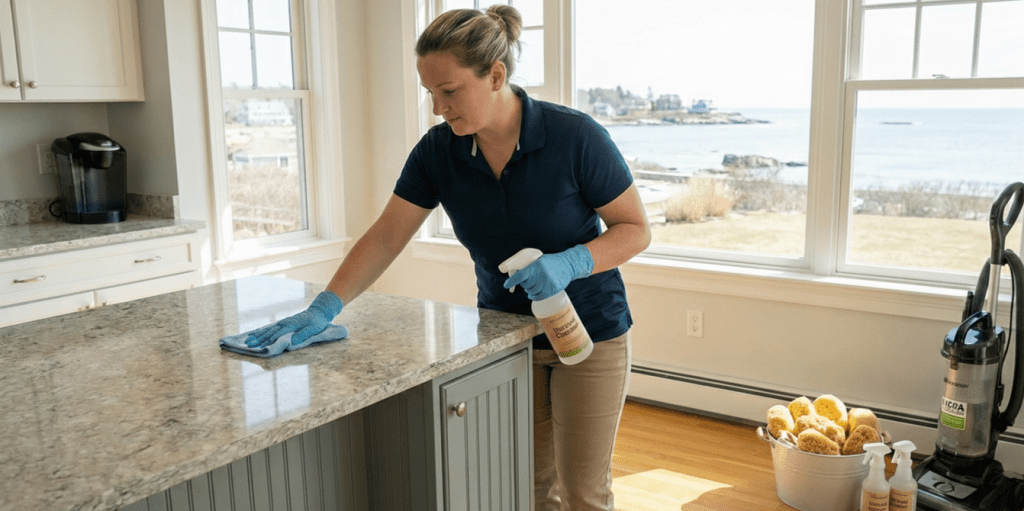
If it feels like dust comes back almost immediately after you clean, you’re not imagining it. Most homes constantly generate and circulate dust, and many cleaning methods don’t fully remove it. They just move it around.
Especially in coastal New Hampshire homes, dust isn’t just indoor debris. It’s a mix of outdoor particles, fabric fibers, skin cells, pet dander, and whatever your HVAC system redistributes throughout the day. Understanding where dust comes from and why it settles so quickly is the first step to keeping it under control through the right cleaning method.
What Dust Actually Is
Dust isn’t one single thing. It’s a combination of:
- Dead skin cells (a natural and constant source)
- Fabric fibers from clothing, rugs, and upholstery
- Pet dander
- Pollen
- Soil, sand, and salt tracked in from outside
- Microscopic particles pulled in through ventilation systems
Here along the Seacoast, seasonal changes make a noticeable difference. Spring pollen, summer humidity, fall debris, and winter road salt all contribute to what settles inside your home. Even in a closed house, dust is being created every day.
Why Dust Returns So Quickly
If you’re cleaning regularly but still seeing buildup, one or more of these factors may be at play.
1. Airflow Patterns Inside the Home
Every time your heating or cooling system cycles on, it moves fine particles through the air. Even high-quality filters can’t capture everything. Dust settles, gets disturbed, and settles again. Ceiling fans, open windows, and even daily foot traffic keep particles circulating longer than most people realize.
2. Improper Removal (Not Just Redistribution)
Many common cleaning habits, like feather dusters, low-quality vacuums, and dry wiping, don’t actually remove dust. They often scatter particles and release fine debris into the air, resulting in dust being moved from one surface to another.
True dust control depends on capture and removal, not just surface wiping. This is why professional systems use microfiber materials and HEPA-filtered vacuums designed to trap microscopic particles rather than recirculate them.
3. Residue From Cleaning Products
This one surprises many homeowners. Some conventional cleaners leave behind a light film. That residue can create static or slightly sticky surfaces, which attract dust more quickly. If surfaces feel oddly slick, even after drying, there may be buildup contributing to faster re-soiling. When surfaces are properly cleaned and residue-free, dust has less to cling to.
4. Humidity Levels
Humidity plays a larger role than most people think.
In very dry winter conditions, dust stays airborne longer. In high humidity, particles can cling to surfaces and fabrics more easily. Coastal homes often experience both extremes throughout the year. Balanced indoor humidity supports better air quality and slower dust accumulation.
Common Myths About Dust
“If I just cleaned, something must be wrong” – Not necessarily. Dust generation is constant. The goal isn’t elimination, it’s reduction and proper removal.
“Stronger cleaners prevent dust” – Cleaning strength has little to do with dust return. Chemical intensity does not equal longer-lasting results. Method matters more.
“Air fresheners improve air quality” – Scent does not equal cleanliness. Many air fresheners simply mask odors while adding additional particles into the air instead of improving air quality.
“New homes shouldn’t be dusty” – In reality, newer homes can produce more dust initially due to construction debris, drywall particles, and off-gassing materials.
Practical Ways to Reduce Dust Buildup
While you can’t stop dust entirely, you can significantly reduce how quickly it accumulates.
| Frequency | Action | Why It Helps |
| Daily | Wipe high-use surfaces with microfiber | Physically traps particles |
| Remove shoes at entryways | Reduces outdoor soil and salt | |
| Manage bathroom humidity | Prevents dust from clinging | |
| Weekly | Vacuum with HEPA filtration | Captures microscopic debris |
| Vacuum upholstery and rugs | Removes embedded dust | |
| Replace/check HVAC filters | Improves air circulation quality | |
| Long-Term | Seal air gaps | Reduces outdoor infiltration |
| Reduce clutter | Minimizes dust-collecting surfaces | |
| Maintain balanced humidity | Supports slower accumulation |
In homes near the ocean, entry mats and regular floor care make a significant difference due to salt and sand.
When Dust May Signal a Larger Issue
Occasionally, excessive dust points to something deeper:
- Ongoing renovation debris
- Attic insulation breakdown
- Poorly sealed ductwork
- Failing weather stripping
- Aging HVAC systems
If dust seems extreme despite consistent cleaning, it may be worth investigating structural or ventilation causes.
What Actually Slows Dust Accumulation
After years of cleaning homes throughout Portsmouth and the surrounding Seacoast, one pattern stands out: Dust builds up fastest in homes where removal is incomplete.
When cleaning focuses on thorough capture (vacuuming with proper filtration, wiping with materials that trap particles, and removing residue rather than layering over it) dust settles more slowly and surfaces stay cleaner longer.
It’s not about chasing perfection. It’s about understanding how homes function. Every house produces dust. The difference is how effectively it’s managed. With the right methods and a consistent approach, dust becomes far less noticeable — and far less frustrating.

- Eco-Friendly Spring Cleaning: How to Manage Indoor and Outdoor Waste Sustainably - June 29, 2026
- Why Does My House Get Dusty So Fast? Causes, Myths, and Practical Solutions - February 20, 2026
- Is Green Cleaning Actually Effective? What Science and Experience Show - February 20, 2026