
Practical After-Care Steps That Help Results Last Longer
After a professional deep cleaning, your home doesn’t just look different – it behaves differently. Surfaces are free of residue, floors are fully detailed, and hidden buildup has been removed. What you do in the hours and days that follow plays a meaningful role in how long those results last.
The good news is that maintaining deep-clean results doesn’t require special products, strict rules, or extra work. A few intentional steps after the service help preserve the work already done and extend its benefits for weeks to come.
Below is a clear, experience-based guide to what matters most once the deep cleaning is complete.
What to Do Immediately After a Deep Cleaning (First 1–2 Hours)
Short answer: Let surfaces dry fully, allow fresh air in, and avoid unnecessary contact.
Most eco-friendly cleaning products dry quickly and don’t leave harmful residues. In a properly cleaned home, surfaces are safe to use once they’re dry — usually within 15 to 60 minutes, depending on the material.
Surface Readiness at a Glance
| Area | When It’s Safe to Use |
| Kitchen counters & bathrooms | Safe to use once dry. Waiting 15 to 20 minutes prevents streaking and water spotting. |
| Floors | Wait 30 to 60 minutes for full drying. This is especially important for hardwood, tile, and sealed stone. Avoid heavy foot traffic during this time. |
| Windows & mirrors | Leave untouched for about an hour to allow the final moisture to evaporate evenly. |
Ventilation helps results last longer. Opening windows for 30 to 60 minutes helps moisture dissipate and supports indoor air quality.
What’s normal to notice: Surfaces may feel different than expected. That’s because they’re genuinely residue-free, not coated with fragrances or synthetic film. This is a good sign.
The First 24–48 Hours: Where Results Are Set
The first day or two after a deep clean is when habits matter most. This is when clean surfaces are most vulnerable to being re-coated with dirt, oils, and outdoor debris. These aren’t permanent rules, just short-term habits that help the work settle properly.
Shoes-off matters more than people think.
In New Hampshire and coastal Maine homes, footwear brings in fine grit, salt residue, pollen, and moisture. A simple shoes-off policy for the first two days significantly reduces floor wear and re-soiling.
Use your home normally—but lightly.
Wipe sinks and counters after use, clean spills promptly, and avoid introducing harsh products. The goal isn’t restriction; it’s prevention.
What to avoid during this window:
- Placing rugs back immediately on damp or recently cleaned floors
- Sliding furniture before floors are fully dry
- Repeatedly touching mirrors or glass “to check” them
Simple Daily and Weekly Habits That Extend Results
You don’t need daily deep cleaning to maintain a deep-cleaned home. Consistency matters more than intensity.
- Daily habits that take under 10 minutes total: Wiping kitchen counters and sinks after meals, doing dishes before bed, and quickly sweeping or vacuuming high-traffic entry areas help prevent oils, crumbs, and grit from accumulating.
- Weekly habits that make a noticeable difference: Vacuum or mop main living areas, wipe bathroom mirrors and fixtures, and lightly dust visible surfaces to help preserve the clean baseline established during the deep clean.
These habits reduce buildup and can extend the time between deep cleanings by months.
Eco-Friendly Maintenance Between Professional Visits
One of the benefits of eco-conscious deep cleaning is that surfaces are left clean, not coated. You don’t need a shelf of products to maintain that. Simple tools work best:
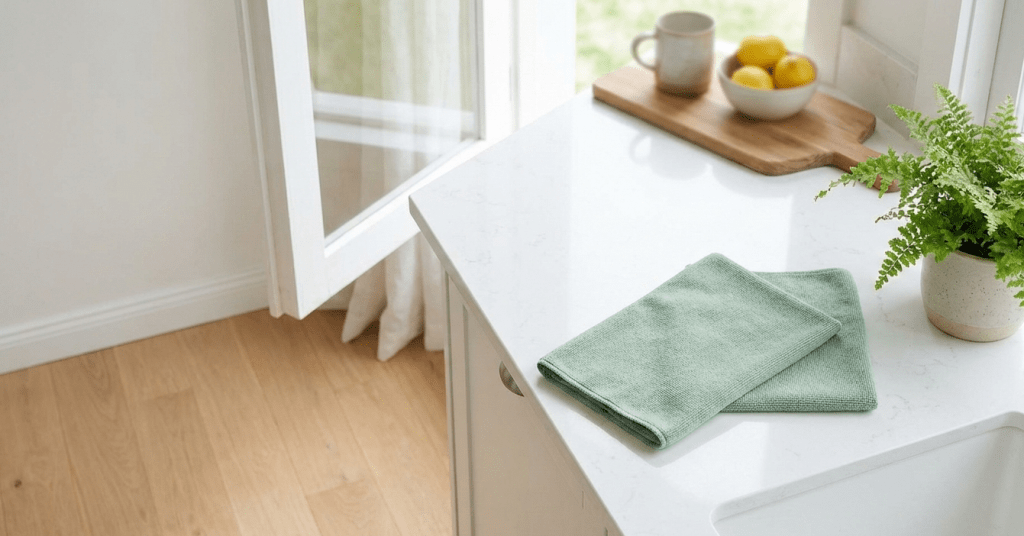
- Microfiber cloths
- Mild soap diluted in water
- Vinegar and water for glass (when needed)
Avoid harsh chemical cleaners.
Bleach, ammonia, and synthetic “antibacterial” sprays can leave residues that attract dirt and interfere with professional results over time.
Maintaining indoor air quality also matters. Regular ventilation, clean HVAC filters, and skipping artificial air fresheners help preserve the healthier environment created during a deep clean.
When Something Looks Off — And When to Reach Out
Some post-cleaning changes are expected. Others aren’t.
Normal:
- Subtle natural scent for a few hours
- Surfaces feeling residue-free
- Minor moisture marks that disappear as they dry
Not expected:
- Sticky or cloudy residue once dry
- Missed areas that were part of the service scope
A professional cleaning company should want to know if something doesn’t look right and should ensure homeowners feel confident reaching out. Addressing small concerns quickly is part of maintaining consistent standards.
The Bottom Line
A deep cleaning resets your home. What you do afterward determines how long that reset holds. Allow surfaces to dry, be intentional for the first day, keep maintenance simple, and avoid reintroducing harsh products. These steps don’t require perfection, just awareness.
When after-care is done well, deep cleaning results last longer, routine maintenance becomes easier, and your home stays healthier between visits. That’s the goal.

- Why Does My House Get Dusty So Fast? Causes, Myths, and Practical Solutions - February 20, 2026
- Is Green Cleaning Actually Effective? What Science and Experience Show - February 20, 2026
- What Should I Do Before a Deep Cleaning Service? - January 28, 2026